Idle Planet Miner
- 4.4
- Rating
- 1.00M
- Installs
- Free
- Price

 Analysis by App-foxy
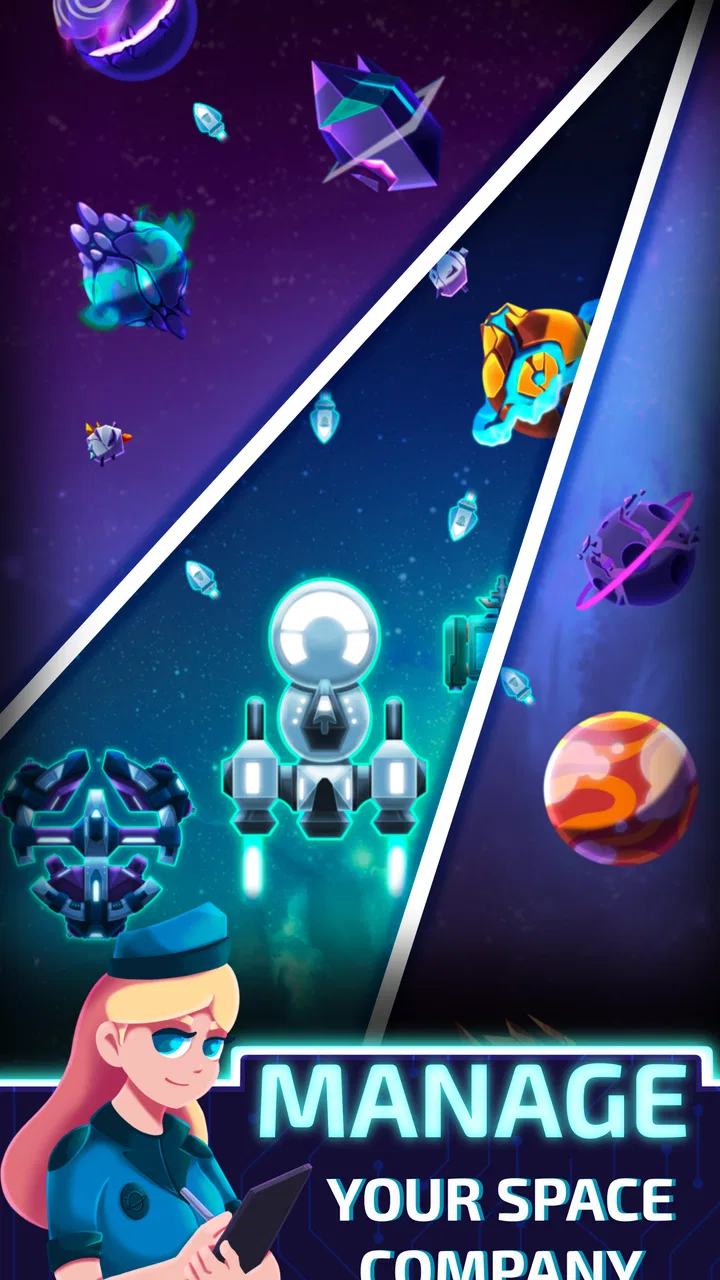
I found Idle Planet Miner easiest to understand when I treated it as a small shared routine rather than a game that demands constant attention. One person can check production while waiting for a bus, another can look in during a quiet moment at home, and the progress keeps giving the household something to discuss without requiring everyone to play at the same time. That makes its space-mining theme a good fit for people who enjoy gradual improvement, numbers moving upward, and light management rather than fast reflexes.
My experience with it was relaxed, but not completely passive. The opening is friendly enough for someone who has never played an idle game, while the longer-term decisions become more interesting once there are more upgrades and resources to consider. I liked that I could make a useful decision in a short session, close the game, and return later with a clear reason to continue. At the same time, anyone expecting a story-driven space adventure or a hands-on mining simulator should adjust their expectations before installing it.
How a shared device changes the way I played
On a household tablet or a phone that several people occasionally use, the game works best when everyone understands that it is one ongoing management project, not a collection of separate personal saves. The appeal comes from watching the same operation grow, so one person can focus on improving production while another checks whether a resource is ready for the next upgrade. That arrangement can turn a few minutes of idle gaming into a small shared habit.
You May Also Like

 Pandora - Music & Podcasts
Pandora’s Music Is Easy to Start, but Harder to Recover
Pandora’s strength is its low-effort path from a seed to a station. Its weak spot is how much confidence it asks you to place in connection, setup, and quiet recovery.

 8 Ball Pool
 Is Built on Rivalries, Rematches, and Routine
A close look at the rivalries, rematches, shared routines, and unanswered safety questions that turn a quick pool match into a persistent mobile community.

 Samsung Music
’s Quiet Strength Is Playing What You Already Own
Its reach comes less from spectacle than from dependable access to a personal library. That simplicity is both the app’s strongest retention engine and its ceiling.

 AccuWeather: Weather Radar
AccuWeather Review: A Quick, Clear Forecast for Everyday Decisions
For everyday plans, the best forecast is the one you can understand quickly. AccuWeather makes rain timing, radar, and local conditions easy to act on, with a few trade-offs.

 Hill Climb Racing
Why Hill Climb Racing Still Turns Crashes Into One More Run
A tiny car, a bumpy hill and one more upgrade: Hill Climb Racing keeps resurfacing because its simple chaos makes every near-miss feel personal.

 AliExpress - Shopping App
AliExpress Makes Global Shopping Feel Personal, but Shoppers Bear the Risk
AliExpress turns a global marketplace into a pocket-sized discovery engine. Its reach is useful, its shopping loop compelling, and its trade-offs easy to miss.
More From Our News Desk
View All News


There is also a practical boundary here: the game does not become a true multiplayer experience simply because several people look at the same device. The progress is still tied to the active game session and the choices made inside it. I would therefore avoid treating it like a competitive family game. It is better suited to cooperation by conversation, such as deciding which improvement seems most useful, than to taking turns trying to beat one another.
A realistic example would be a parent checking the mine during a coffee break and leaving the device available for a teenager later in the evening. The first player might improve an area that increases regular output, while the second uses the accumulated progress for a larger upgrade. That can feel satisfying because both actions contribute to the same expanding operation. It can also become frustrating if nobody says what they changed, especially when a carefully saved resource disappears into an upgrade that the next person would not have chosen.
For that reason, I recommend a simple household rule: before making a major purchase, say what you are upgrading and why. This is not a feature of the game; it is a useful way to prevent arguments on a shared device. Idle games reward patience, and a rushed decision made by one person can affect the rhythm that another person was building.
A calm game with decisions hidden inside the waiting
The central loop is straightforward. Production continues, resources accumulate, and I spend those resources on improvements that help the operation become more productive. The satisfaction comes from turning a modest beginning into a system that feels increasingly capable. It is a familiar structure for the simulation game category, but the space-mining setting gives the routine a stronger sense of direction than a plain counter on a screen.
What I enjoyed most was the contrast between short checks and longer planning. A quick visit lets me collect progress or make a small improvement. A more deliberate session invites me to think about whether immediate output is more valuable than saving for a larger step. That trade-off is easy to miss if I tap every available upgrade immediately. In my experience, holding back for a meaningful improvement can make the next return feel more rewarding.
One useful habit is to separate “maintenance” visits from “planning” visits. During maintenance, I simply check the operation and use obvious low-cost improvements. During planning, I look at the available choices and decide what kind of growth I want next. This prevents the game from becoming a stream of automatic taps and makes the management side more noticeable.
The game is not demanding in the way an action title is. There is no need for precise timing or rapid reactions, which makes it comfortable for a shared living room and for players who prefer something gentle. However, relaxing does not mean endlessly engaging. There are moments when the best choice is to leave the game alone and return later. Players who need constant novelty may find that rhythm too slow.
Setting boundaries before someone else takes over
Because this is a free game with optional purchases, I would be especially careful when it is installed on a device used by children or by several family members. The listed in-app purchase range runs from $4.99 to $99.99 per item, so a household should agree in advance about whether purchases are allowed at all. I would not hand the device to a child and assume that the word “free” settles the question.
The safest approach is a clear household agreement: no purchase without asking the person responsible for the device or payment method. That rule matters more here than the game’s calm tone might suggest. A peaceful interface can still lead to a real spending decision, and a shared device makes it easy for one person to misunderstand who is authorized to buy something.
I also recommend deciding who is allowed to reset, reinstall, or change the active progress before the game becomes a regular family activity. I am not presenting those as special game controls; they are ordinary device and household concerns. The important point is that idle progress feels valuable precisely because it accumulates over time. If a child or guest opens the game without understanding that, an accidental change can spoil the experience for everyone.
For a personal phone, this is much simpler. I can play at my own pace and make choices without explaining them. On a shared tablet, I would keep the game in a clearly agreed place and tell other users whether they are welcome to play or only to watch. That small amount of coordination makes the difference between a communal pastime and a source of confusion.
Coordinating choices without turning it into homework
Idle Planet Miner is a good candidate for light coordination because its decisions can be discussed in ordinary language. Instead of asking another player to master complicated controls, I can say, “Should we improve the current operation now or save for the next larger step?” That makes it accessible to family members who do not usually play management games.
Still, coordination works only if the group accepts that not every decision will be optimal. A younger player may choose an upgrade because it looks exciting, while an experienced player may prefer a slower route that improves long-term efficiency. I would let children make some choices rather than correcting every tap. The game is more enjoyable when discussion supports curiosity instead of becoming a lesson in perfect optimization.
A practical system is to give each person a role for a short period. One person can handle quick collections, another can review upgrade options, and a third can simply suggest what seems most interesting. Rotating those roles keeps the device from becoming the property of the most experienced player. It also makes the game easier to share when reading ability, patience, or gaming experience differs across the household.
There is a trade-off between shared decision-making and progress speed. If every upgrade requires a family meeting, the game loses its easygoing character. I would reserve discussion for expensive or strategically important choices and let routine improvements happen without ceremony. That keeps the social element pleasant instead of making a simple idle game feel like a group project.
Another tip is to use the game as a conversation starter rather than a reward system. I would avoid promising a child extra play time for reaching a particular production target, because that can turn a calm experience into pressure. The stronger use case is a brief check-in: see what changed, talk about the next goal, and put the device away. The game supports that rhythm well because progress does not require everyone to be present simultaneously.
Age context, trust, and the right kind of supervision
The content rating is Everyone, which fits the non-violent, accessible tone I experienced. That does not mean every child will enjoy it equally. A child who likes building, collecting, and watching systems improve may stay interested, while a child looking for immediate action may lose patience quickly. Age suitability and attention suitability are different questions here.
For younger players, I would explain three things before handing over the device: progress is gradual, choices can affect the shared operation, and purchases require permission. That short explanation is more useful than hovering over every action. Older children can usually manage the routine independently, but I would still make the spending boundary explicit because the game is free to start and includes optional purchases.
Trust matters in a shared save. If one person repeatedly spends resources without telling anyone, the problem is not that the game is too complicated; it is that the household has not agreed on ownership of the progress. I would treat the save as belonging to the group only if everyone accepts that their decisions are visible and discussable. Otherwise, separate personal play is a better arrangement.
The game’s relaxed pace can also make it suitable for a quiet evening, but I would not use it as a substitute for supervision. The Everyone rating describes the content, not a family’s spending rules, screen-time expectations, or device-sharing habits. A parent still needs to decide when the device is available and whether the child can interact with purchase prompts.
Adults who dislike idle mechanics should also be honest with themselves. The game will not suddenly become a deep engineering simulator because the setting is space. Its appeal is in incremental management, not technical realism. If someone wants detailed construction, direct control, or a strong narrative campaign, a conventional strategy or building game will probably be a better choice.
What makes it different from other casual simulations
Compared with a traditional city builder, this game asks for less constant attention and offers fewer reasons to rearrange a physical space. Compared with a clicker, it gives the growing operation a more recognizable theme and a stronger feeling of managing an industrial chain. Compared with an action mining game, it removes the hands-on digging and replaces it with planning around accumulated output.
That middle ground is its main strength. I can enjoy the satisfaction of expansion without committing to a long uninterrupted session. The cost is that I have less direct control over the moment-to-moment activity. Players who want every action to matter immediately may see the idle structure as a limitation rather than a convenience.
It also differs from competitive mobile games because there is no need for me to perform under pressure from another player in the same moment. That makes it more comfortable on a family device, where people may have different schedules. The downside is that it offers less social urgency. If I need live competition, team communication, or a strong sense of shared events, I would choose another category.
The best comparison is therefore not “better or worse than every other simulator,” but “which kind of attention do I want to give?” This one suits short visits, delayed rewards, and gradual decisions. A more active alternative is better for someone who wants immediate feedback from skill. A deeper management title is better for someone who wants complex systems and detailed control. The game succeeds when its limitations match the player’s preferred pace.
Developer, technical details, and everyday practicality
Tech Tree Games is the developer behind this release. I found the overall concept easy to explain, which is useful when introducing it to someone who has not played idle games before. The game is free to download, carries an average rating of 4.5 from around 98 thousand ratings, and has passed one million installs, so it clearly has an established audience rather than feeling like an obscure experiment.
It was released on January 18, 2019, and the current version is 2.7.11. The minimum operating system is Android 7.0, which makes it approachable for people using an older compatible Android device. I would still check the device itself before planning a shared installation, especially if the phone or tablet is already short on storage or used by several demanding apps.
The age rating and free entry point make it easy to test without committing money immediately. I would use that trial period to answer a more important question than whether the theme looks appealing: do I enjoy checking a system repeatedly and waiting for progress? If the answer is no, paying for an optional improvement will not fix the underlying mismatch.
For a household, the device matters as much as the game. A small phone is fine for one person, but a larger shared screen makes it easier for two people to discuss upgrades. On the other hand, a shared device can create interruptions, and an idle game loses some of its charm if someone constantly takes over the session. I would choose a personal device for independent play and a tablet only when the group genuinely wants to coordinate.
Who should play it, and who should skip it
I would recommend it to players who enjoy incremental progress, light resource management, and a space theme without demanding controls. It is particularly suitable for someone who wants a game that can fit around chores, commuting, study breaks, or a quiet evening. Families can also enjoy it as a cooperative discussion game, provided they set boundaries around purchases and shared progress first.
I would be more cautious about recommending it to children who become upset when progress is slow or who tend to tap through every option without reading. I would also skip it for anyone who wants a complete experience in one sitting. The game’s satisfaction depends on returning, waiting, and making a series of small decisions over time.
Players who are sensitive to monetization should decide their rules before playing. The free starting point is convenient, but optional purchases can change how tempting the progression feels. I prefer treating those purchases as unnecessary extras and judging the game on its ordinary loop. If the basic routine is not enjoyable without spending, the game is probably not the right fit.
Finally, I would not choose it as the main game for a household that needs separate accounts, private progress, or clearly divided profiles. Shared play can work through communication, but communication is not the same as built-in account separation. If each family member wants an independent long-term operation, a game designed around individual profiles will be less troublesome.
My household verdict
After spending time with it, I see Idle Planet Miner as a gentle, conversation-friendly simulation rather than a conventional space adventure. Its best moments come from returning to a growing operation, choosing an improvement with a purpose, and noticing that a few small decisions have changed the pace of progress. That loop is simple, but it is satisfying when I approach it with the right expectations.
For shared use, I would recommend agreeing on purchase permissions, deciding whether the progress belongs to everyone, and keeping major upgrades open for discussion. Those three steps solve most of the friction I can imagine on a family device. The Everyone rating makes the content broadly approachable, but household trust and spending rules still need to come from the people using the device.
My final recommendation is positive for patient players and mixed households that want a low-pressure game to check together. I would choose something more active for competitive sessions, something more detailed for serious management, and something more story-focused for a narrative evening. If gradual space-mining progress sounds appealing and you are comfortable with the idle format, this free game is worth trying before deciding whether its optional purchases have any place in your routine.
FAQs for Idle Planet Miner
01What is the main objective of Idle Planet Miner?
Idle Planet Miner is a simulation game where players manage and expand a mining empire across various planets. The main objective is to extract resources, upgrade your mining operations, and optimize production to maximize profits. Players can explore new planets, research technologies, and automate processes to ensure a steady flow of income.
02Is Idle Planet Miner free to play?
Yes, Idle Planet Miner is free to download and play on both Android and iOS platforms. However, it does offer in-app purchases that can enhance gameplay, such as purchasing premium currency or special items to accelerate progress. These purchases are optional and not necessary to enjoy the full experience.
03How does automation work in Idle Planet Miner?
Automation is a key feature in Idle Planet Miner, allowing players to set up mining operations that continue to function even when they're not actively playing. By investing in technology upgrades and hiring managers, players can automate resource extraction and processing, ensuring a constant stream of income and efficiency improvements over time.
04Does Idle Planet Miner require an internet connection?
Idle Planet Miner can be played offline, which makes it convenient for users who want to enjoy the game without a constant internet connection. However, certain features, such as cloud saving and leaderboards, require online access. It's recommended to connect periodically to save progress and access additional features.
05What are some strategies for success in Idle Planet Miner?
Success in Idle Planet Miner involves strategic planning and resource management. Focus on upgrading your most profitable mines and balancing investments in technology and automation. Prioritize planets with rare resources and complete missions to earn rewards. Regularly check your operations to optimize production and respond to any market changes.
Pros
- Engaging idle gameplay with minimal effort.
- Rich graphics and immersive space theme.
- Regular updates with new features.
- Allows offline progression and rewards.
- Diverse planets and resources to mine.
Cons
- Can become repetitive over time.
- Requires constant updates for best experience.
- In-app purchases can be pricey.
- Resource management can be complex.
- Limited social interaction features.

Idle Planet Miner
Gallery